
And Now, about Collagen
This buzzy supplement is touted for its many benefits, like skin rejuvenation and anti-aging, to muscle recovery and bone health. From sprinkling it in your morning coffee or adding a scoop to your smoothie, popping a supplement, or slathering it on your face and body, collagen has found its way into many of our dishes, drinks, and beauty routines. Let’s look at what it is, and what it does.

WHAT IS COLLAGEN?
Our bodies are composed of many different proteins, and some of them are varied types of collagen. Collagen is made naturally in the body and is primarily made of three amino acids (proline, glycine, and hydroxyproline), which group together to form protein fibrils in a triple helix structure.
Collagen accounts for 30% of our body’s protein. As the primary building block of protein it provides:
Structure, strength, and elasticity for your skin, for muscle, bones, and connective tissues
Plays a role in replacing dead skin cells
Provides protective covering for organs
Helps blood clot
COLLAGEN MADE IN THE BODY
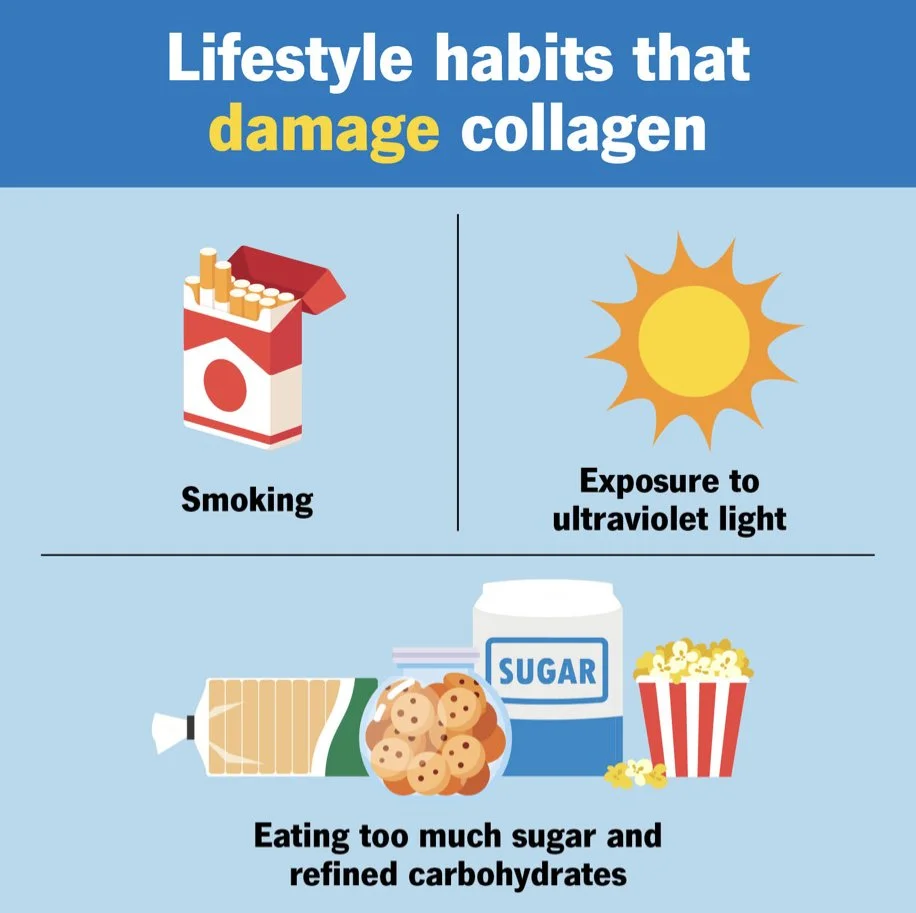
A well-balanced diet and healthy lifestyle habits give your body the raw ingredients it needs to help make collagen naturally. With the proper amount of vitamin C, zinc, copper, and manganese, your body is usually capable of producing healthy levels of collagen. On the other hand, here are some habits that interfere with collagen formation.
THE VALUE OF COLLAGEN SUPPLEMENTS
Though Scientific research is lacking for most collagen supplements, there are ample studies showing that regular use of HIGH QUALITY and TARGETED collagen supplements may show these benefits:
Improved skin condition and less skin aging to help fibroblasts form in your dermis (middle skin layer), aiding new cell growth
Better recovery, reduced pain, and improved strength after resistance training.
Faster wound healing
Helps to reduce pain and improve strength in resistance training.
Improved hair growth with keratin, a protein made from amino acids naturally found in collagen
Improved bone mineral density and strength in menopause
SKIN AGING
The body produces less collagen as you age, collagen is lower in quality than younger years, and existing collagen breaks down at a faster rate, leading to thinner, drier, and less elastic skin. Taking collagen supplements every day may show better hydration and elasticity after 90 days.
WHAT YOU CAN DO
First and foremost, help your body make collagen naturally by eating a well-balanced diet of healthy food, including chicken, beef, fish, dairy, eggs, beans, leafy greens, other vegetables, whole grains, and citrus fruits. To improve damage to the collagen in your skin, don’t smoke (including second-hand smoke), avoid alcohol, and wear sunscreen every day.
If you choose to supplement, do thorough research and find the best quality collagen targeted to the specific use you are looking to improve.
To reach your goal of maximized health, fitness, or performance, focus on the basics. Make sure you exercise regularly, eat right, get enough sleep, and avoid alcohol and nicotine products.
Reach out to me, Sharon, for more information on collagen and specific recommendations for your individual needs.